


13
Islamabad


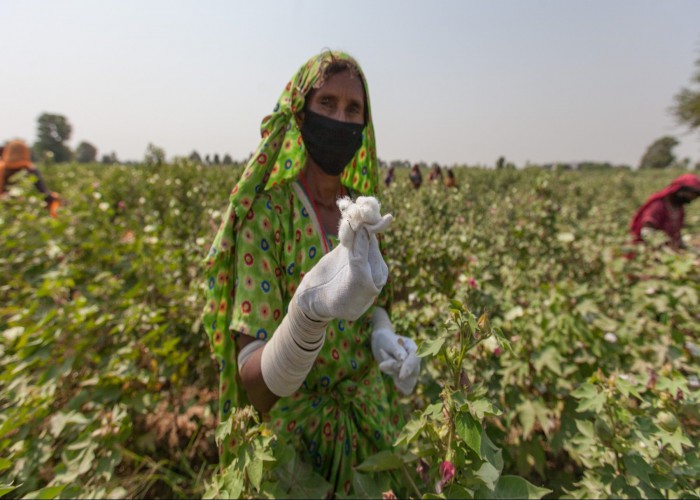
To better understand the current impact of the COVID-19 pandemic, and to find out how to build future resilience in cotton farming communities, we asked the farmers enrolled in our cotton training programmes in India and Pakistan, and the local partners implementing these programmes, how they have been affected.
Key
findings include:
·
74% of farmers said their farming has been affected because of
the COVID-19 pandemic
·
62% of farmers said they were not able to build enough savings
to buy inputs for the sowing season
·
Only 39% of farmers said they have benefitted from government
schemes designed to help them
·
Farmers identified stronger and timely agricultural training and
increased market linkage and cotton sale support to help build long term
resilience.
The
report includes recommendations to:
·
Build financial resilience: e.g. through income
diversification, accessing government schemes, self -help groups (SHGs) or
low-interest loans
·
Build agricultural resilience: e.g. through crop
diversification and alternate livelihoods
·
Increase market linkages: e.g. assurance that
farmers will be able to sell their cotton
Building
resilience for cotton farmers includes brands and supply chain actors working
together to make sure that farmers have security that they can sell their
cotton. This calls for reinventing the role of brands, not just as procurers of
cotton, but with a responsibility for each stage of the supply chain,
ultimately supporting smallholder farmers to thrive.
At CottonConnect, our approach has always been to listen to the
cotton farming communities we work with. During the COVID-19 pandemic we asked
what response was needed. Our Sustainable
Lives: Mission Hope campaign has now reached over 90,000 cotton farmers in
India and Pakistan, increasing awareness of practical measures to prevent
transmission, for example through handwashing.
Source: In June 2020 CottonConnect surveyed cotton farmers and
local implementing partners in India and Pakistan. The 57 cotton farmers who
participated in the survey included farmers from Gujarat, Maharashtra and Madhya
Pradesh in India and from Sindh in Pakistan. 22 representatives, including
CEOs, Directors, Production Unit Managers, Project Coordinators and Field
Executives, were surveyed from seven local implementing partners who represent
over 141,000 farmers.

The property, complete with 30-seat screening from room, a 100-seat amphitheater and a swimming pond with sandy shower…
The property, complete with 30-seat screening from room, a 100-seat amphitheater and a swimming pond with sandy shower…

The property, complete with 30-seat screening from room, a 100-seat amphitheater and a swimming pond with sandy shower…
The property, complete with 30-seat screening from room, a 100-seat amphitheater and a swimming pond with sandy shower…
The property, complete with 30-seat screening from room, a 100-seat amphitheater and a swimming pond with sandy shower…

We’ve invested every aspect of how we serve our users over the past Pellentesque rutrum ante in nulla suscipit, vel posuere leo tristique.
We’ve invested every aspect of how we serve our users over the past Pellentesque rutrum ante in nulla suscipit, vel posuere leo tristique.
We’ve invested every aspect of how we serve our users over the past Pellentesque rutrum ante in nulla suscipit, vel posuere leo tristique.
We’ve invested every aspect of how we serve our users over the past Pellentesque rutrum ante in nulla suscipit, vel posuere leo tristique.


We hate spam as much as you do
March 26, 2020
March 26, 2020
March 26, 2020
© Copyright 2020, All Rights Reserved


