


13
Islamabad


The world is getting very excited about organics. Organic farmers look after soil fertility and biological diversity, and they avoid the use of pesticides, antibiotics, fertilisers, and genetically modified organisms (GMO). And, from fruit and vegetables to cotton and cocoa, consumers continue to seek out goods that are produced on land farmed in the most sustainable way.
To meet
the growing demand, organic farming is booming. According to Ecovia
Intelligence, the global market for organic food reached US$97 billion in 2017,
with many markets hitting double-digit growth rates. The French appetite for
organics grew 18%, for example.
The
area cultivated for organic farming has reached an all-time high, with almost
70 million hectares of land dedicated to it. That is 20% more land than the previous
year, says the Research Institute of Organic Agriculture (FiBL). Now, in 14
countries, 10% or more of all agricultural land is organic.
Of
course, the numbers of organic producers are growing too. Around 2.9 million
farmers are practicing organic farming on land across the world (up 5% on the
previous year), with the highest number recorded in India (835,200), according
to FiBL figures.
This
growth in demand for organic goods, particularly in market segments such as
home textiles and hospitality, has seen more companies strive to build greater
transparency in their supply networks, review pricing structures, and look to
create greater diversity in organic cotton sourcing regions.
At
CottonConnect, we understand why this growth continues. Having spent the last
seven years working with partners to support thousands of organic cotton
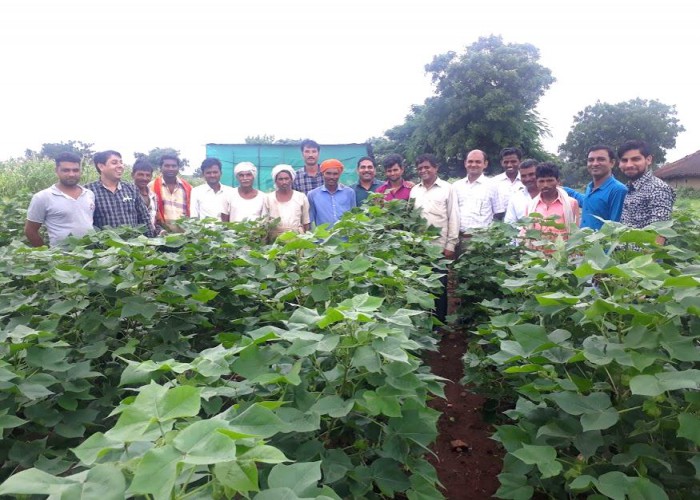
farmers across India, we have seen the benefits of sustainable agricultural
practice first hand.
Working
with partners such as C&A Foundation, Coyuchi, Carrefour and Volcom, we
continue to help farmers understand the benefits of organic farming, and give
them the knowledge and tools to convert their farms to grow cotton as
efficiently as possible. We also help them to get their farms certified so that
they can realise the value of producing sustainable cotton.
Here,
we give you a summary of the key lessons and insights we have learned through
our work with farmers and partners in the organic sector.
We met
with our Organic Cotton Farmer Training Programme partners earlier this year,
including VRTI, MAHITI, Prerana, Pratibha, Shree Ram Fiber and Nobel EcoTech.
Based on real feedback we received, here is a summary of the key lessons and
insights we have learned, including the challenges that still remain for
organic farmers.
1. Awareness of organic farming practices is
growing
While
organic farming has been around for decades, only now is it gaining real
traction with a new generation of farmers, re-energising the market and
creating a movement across the cotton sector.
Our
five-year Organic Cotton Farmer Training Programme with the C&A Foundation,
for example, saw us provide technical and financial support to almost 23,000
farmers.
2. Farmer training and capacity building is
crucial
Education
and know-how is key to scaling up organic practices. Not only do farmers need
support in understanding what constitutes good agricultural practice, they can
also learn about organic cotton cultivation, financing of organic certification
and the organisation of farmer collectives.
3. Organic farming really does improve soil
quality
Soil
quality is the foundation on which good farming is based. By adopting organic
practices, the soil is able to retain higher amounts of nutrients compared to
conventional soil. This boosts crop quality and further reduces the need for
fertilisers.
Our
training programmes teach farmers how to maintain soil health through methods
such as intercropping. Growing peas or beans alongside cotton, for example, can
help to improve nutrient fixation which ultimately improves the quality of the
cotton.
4. Farmers are not spending as much on inputs
Chemical-free
farming practices are not only good for the environment, but they are good for
the wallet too. Many cotton farmers that we work with had previously found
pesticides becoming ineffective, with natural predatory insects in decline
across ecosystems due to excessive use of chemicals. It was more expensive to
treat the crops and some farmers lost interest in cotton farming altogether.
By
adopting organic inputs, not only did they find there was a drop in pest
attacks in the field, but cultivation costs fell too. Integrated Pest
Management, through intercropping, trap cropping and border cropping, helps to
maintain a healthy biodiversity and keep pests at bay. Our training programmes
also help farmers to learn how to produce their own inputs using locally
available materials, including farmyard manure.
5. A premium can be achieved for organic
produce
Brands
are increasingly willing to pay more for certified organic cotton. By switching
to organic, farmers are able to improve relationships with customers and find
new markets for their produce.
Also,
not only are farmers gaining revenue from their cotton, but they can also make
money from other crops grown in the field, all of which are certified as
organic too.
Our
programmes help to connect farmers directly with our partner brands, but they
are also free to sell their organic cotton elsewhere too. Commonly, farmers can
achieve a 10% premium on the market price.
6. Household livelihoods are better
Of
course, if farmers are making more money from their crops, they have more
disposable income to spend on other things, such as sending their children to
school, making sure they have more food at home, and further investing in their
farms.
7. Entire communities can thrive and prosper
Growing
a pool of more prosperous farmers creates a more sustainable community of
households able to sustain themselves, grow their businesses and improve health
and wellbeing.
By
improving seed availability and quality for local farm groups, boosting supply
chain linkages with ginners and spinners and creating a better infrastructure,
entire communities can share in the benefits of organic farming.
8. Finding quality non-GMOds remains a
challenge
Starting
with the right seeds is crucial. With few non-GMO seed vari seeeties available,
farmers wishing to adopt organic practices still find it hard to access good
quality seeds.
We work
hard to explore a range of authentic seeds to determine the ones that will
produce the best crop, with greater yields and better fibre qualities.
9. Farmers remain keen on switching to
alternative crops
Encouraging
farmers to stick with their organic cotton farms, rather than switching to
other crops whenever there is an erratic weather event or a jump on market
prices, for example, remains a challenge.
Bt
cotton (a genetically-modified, pest-resistant plant cotton variety) often
produces greater yields. However, sticking with organic for the long-term has
proven to deliver strong results for thousands of farmers.
10. Getting certified can be a headache
Ensuring
farming methods comply with organic principles through certification is
important if farmers are to reap the economic benefits of producing cotton
sustainably.
But,
getting certified can be a complex process. Often for farmers it’s a choice
between following the right approach versus following an easy approach. But
improving integrity means improving the quality of the product, protecting the
environment and creating better livelihoods for farmers and their families.
11. Scaling organic farming requires more
commitment from brands
Cotton
farmers are increasingly seeing organic farming as a viable business model.
However,
organic cotton farming comes with a unique set of challenges, not least in
securing genuine non-GMO seeds and producing lower yields than GMO crops. There
are also additional costs associated with certification.
None of
this is a problem if brands are willing to support the organic movement by
paying a premium for certified organic cotton and creating more and more demand
for high quality, sustainable produce.
12. Organic is inspiring the whole sector
The
impressive results achieved by organic cotton farmers is helping to galvanise
and inspire the entire sector. We have been able to use what we have learned
from the approach and practices of our organic farmers and introduced those
across all of our other work too.

The property, complete with 30-seat screening from room, a 100-seat amphitheater and a swimming pond with sandy shower…
The property, complete with 30-seat screening from room, a 100-seat amphitheater and a swimming pond with sandy shower…

The property, complete with 30-seat screening from room, a 100-seat amphitheater and a swimming pond with sandy shower…
The property, complete with 30-seat screening from room, a 100-seat amphitheater and a swimming pond with sandy shower…
The property, complete with 30-seat screening from room, a 100-seat amphitheater and a swimming pond with sandy shower…

We’ve invested every aspect of how we serve our users over the past Pellentesque rutrum ante in nulla suscipit, vel posuere leo tristique.
We’ve invested every aspect of how we serve our users over the past Pellentesque rutrum ante in nulla suscipit, vel posuere leo tristique.
We’ve invested every aspect of how we serve our users over the past Pellentesque rutrum ante in nulla suscipit, vel posuere leo tristique.
We’ve invested every aspect of how we serve our users over the past Pellentesque rutrum ante in nulla suscipit, vel posuere leo tristique.


We hate spam as much as you do
March 26, 2020
March 26, 2020
March 26, 2020
© Copyright 2020, All Rights Reserved


