


13
Islamabad


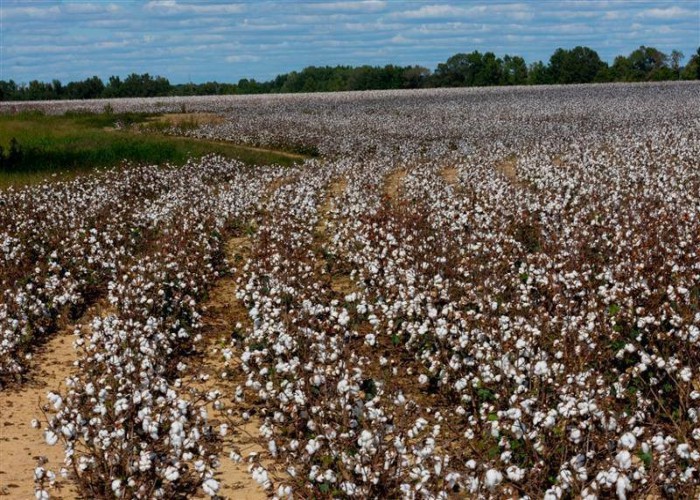
Gap Inc’s director of product sustainability, Alice Hartley, discusses the business’s commitment to sourcing 100% of its cotton from more sustainable sources by 2025.
27 JANUARY 2021
In December 2020, the retail group
joined the US Cotton Trust Protocol, which helps companies to source
sustainable cotton by tracking it throughout the supply chain. It has also
signed up to Textile Exchange’s 2025 Sustainable Cotton Challenge, which calls
for more than 50% of the world’s cotton to be converted to more sustainable
growing methods.
The pledge has been made across all of Gap Inc’s fascias,
including Gap, Old Navy, Banana Republic and Athleta.
Just over half (57%) of cotton used by Gap Inc has been sourced
sustainably since 2016.
The business’s director of product sustainability, Alice Hartley,
tells Drapers how the group is aiming to source 100% of its cotton from more sustainable
sources by 2025.
Since our founding in 1969, Gap Inc has aspired to “do more than
sell clothes”. We have deeply held values and a commitment to using our scale
to be a force for good in the world. We look at sustainability through a wide
lens that includes people and the environment, and look for ways to have a
positive impact on the communities where we do business.
We have defined “more sustainable sources” to include organic,
recycled, and cotton from the Better Cotton Initiative (BCI) and US Cotton
Trust Protocol. We are making good progress toward our goal: 57% of our cotton
volume comes through these programmes.
The sustainable cotton programmes we support were also recognised
by the 2025 Sustainable Cotton Challenge, so it made sense to sign on to this
initiative. Sustainability is a pre-competitive realm in which we can make
progress faster by working together, so we look for opportunities to join
forces with like-minded brands that want to lead change across our industry.
Across Gap Inc, cotton is our number one fibre – representing more
than 60% of our total fibre volume. So it’s critical for us to be a leader in
sustainable cotton – for example, by signing on to the new US Cotton Trust
Protocol, which will year-on-year field data under which we will commit
standards on areas including water use, greenhouse gas emissions and soil
health. Our sustainable cotton goal also supports our climate and water
strategies, as materials are a significant contributor to supply chain impacts.
Our participation in sustainable cotton sourcing is through a mix
of approaches led by our brands and by Gap Inc’s Global Sustainability team.
With certified recycled and organic cotton, our brands’ design teams play a
lead role in selecting fabrics with these fibres and marketing the benefits to
customers. With BCI and the US Cotton Trust Protocol, because they are mass
balance based [calculation-based] programmes, Gap Inc takes the lead on supporting
these programmes on behalf of all our brands.
To accelerate the adoption of more sustainable materials, we
created the Gap Inc Preferred Fiber Toolkit (PFT) [in September 2020] to
evaluate the environmental and social impacts of various fibres. This list
includes recycled cotton, polyester and wool, along with preferred options for
a range of natural and synthetic fibres. Recently we announced that we are
gifting this tool to Textile Exchange [a global non-profit organisation that
collects and publishes industry data], which will relaunching it as the
Preferred Fiber and Materials Matrix this year. Our hope is that by sharing
this resource with the industry, we can help other brands to more quickly adopt
preferred fibres.
Our preferred fibres list includes preferred alternatives to
conventional wool – the largest by volume of our animal-derived fibres. Some of
our brands have also started using Responsible Down Standard certified down and
feathers. Our animal welfare policy prohibits the use of real fur, and outlines
our expectations regarding ethical and humane treatment of animals.
When using new materials or manufacturing techniques, there’s a
learning curve that often comes with challenges related to balancing cost,
quality and impact. We want to identify the product-related solutions that are
scalable and make meaningful impact.
Where our brands have tied customer messaging and storytelling to
sustainability, we have seen a strong response from customers. Examples include
Banana Republic’s marketing of organic cotton and Dry Indigo denim, and the Gap
Teen collection.
We are very aware of the risks of greenwashing, and work hard to
ensure that claims made to customers are credible and trustworthy. Our brands –
Gap, Banana Republic, Athleta, Old Navy – have each approached sustainability
through their own lens in communicating to customers. Sustainability is a
journey, so our goal is to make meaningful progress, even when we know we can’t
be perfect.
wool 2030
a strategic plan for Australian
woolgrowers
Wool 2030 has been an AWI project to develop a 10-year
strategic plan for Australian woolgrowers. The development of the plan was one
of the recommendations arising from AWI’s 2018 review of performance by Ernst
and Young. AWI’s Woolgrower Consultation Group (WCG), plus ‘next generation’
representatives, have overseen the project.
The plan is for the benefit of Australian woolgrowers, as they are AWI’s
primary stakeholders and levy-payers. Downstream sectors of the Australian wool
industry will also be vital partners in the implementation of the plan.
The planning process commenced with the development of a series of discussion
papers, each of which was discussed and subsequently considered by the expanded
WCG. A wide range of industry participants were directly consulted and an
online survey, attracting over 850 responses, was run. The expanded WCG worked
with the consultancy team to draft and review the strategy. The strategy was
circulated to industry participants for comment before it was finalised.

The property, complete with 30-seat screening from room, a 100-seat amphitheater and a swimming pond with sandy shower…
The property, complete with 30-seat screening from room, a 100-seat amphitheater and a swimming pond with sandy shower…

The property, complete with 30-seat screening from room, a 100-seat amphitheater and a swimming pond with sandy shower…
The property, complete with 30-seat screening from room, a 100-seat amphitheater and a swimming pond with sandy shower…
The property, complete with 30-seat screening from room, a 100-seat amphitheater and a swimming pond with sandy shower…

We’ve invested every aspect of how we serve our users over the past Pellentesque rutrum ante in nulla suscipit, vel posuere leo tristique.
We’ve invested every aspect of how we serve our users over the past Pellentesque rutrum ante in nulla suscipit, vel posuere leo tristique.
We’ve invested every aspect of how we serve our users over the past Pellentesque rutrum ante in nulla suscipit, vel posuere leo tristique.
We’ve invested every aspect of how we serve our users over the past Pellentesque rutrum ante in nulla suscipit, vel posuere leo tristique.


We hate spam as much as you do
March 26, 2020
March 26, 2020
March 26, 2020
© Copyright 2020, All Rights Reserved


