


13
Islamabad
Severity: Warning
Message: Invalid argument supplied for foreach()
Filename: controllers/Main.php
Line Number: 51
Backtrace:
File: /home/textilet/public_html/application/controllers/Main.php
Line: 51
Function: _error_handler
File: /home/textilet/public_html/index.php
Line: 315
Function: require_once
Severity: Notice
Message: Trying to access array offset on value of type bool
Filename: controllers/Main.php
Line Number: 52
Backtrace:
File: /home/textilet/public_html/application/controllers/Main.php
Line: 52
Function: _error_handler
File: /home/textilet/public_html/index.php
Line: 315
Function: require_once


The U.S. cotton industry is seeking continual improvement in sustainable cotton production, striving to more efficiently use our natural resources—water, land, carbon, and energy. With consumers’ rising interest in the environmental impact of brands and products, increasing the sustainability of cotton ultimately offers benefits at every step of cotton’s journey from “dirt to shirt.” The sustainable journey for cotton incorporates a variety of approaches and practices, including regenerative agriculture practices.
Regenerative
Agriculture
A holistic approach,
regenerative agriculture supports resilience and builds and nourishes our
ecosystem. Field to Market: The Alliance for
Sustainable Agriculture, of which Cotton
Incorporated is a member, defines it as “a
systems-based perspective that sequesters carbon in the soil and intentionally
improves soil health, biodiversity, water quality, and air quality while
ensuring the viability of farm production.”
Field to Market goes on
to outline five key principles of a regenerative agriculture system. These
principles are “based in Indigenous ways of land management and are adaptive to
local physical conditions and culture.” They include:
It’s important to note
that there are many ways to support these principles; there is no single,
prescriptive set of practices to achieve the goals of regenerative agriculture.
It’s an approach that can include different combinations of responsible growing
practices tailored by crop, growing region, and other factors. This is
important as what may be regenerative in one region of the U.S. may not work in
another region. These regenerative practices need to be place based and must
fit in the context of the regional production systems.
Cotton producers are
incorporating a number of regenerative agriculture practices, which
support U.S. cotton’s 10-year sustainability goals of
increasing soil carbon and land-use efficiency while decreasing water and
energy use, greenhouse gas emissions, and soil loss per acre. Read on for a
high-level look at some of the regenerative agriculture principles and
practices at work in U.S. cotton fields today.
Optimizing
Soil Health
The first three
principles of regenerative agriculture are focused on soil health: minimizing
soil disturbance, maintaining living roots in the soil, and continuously
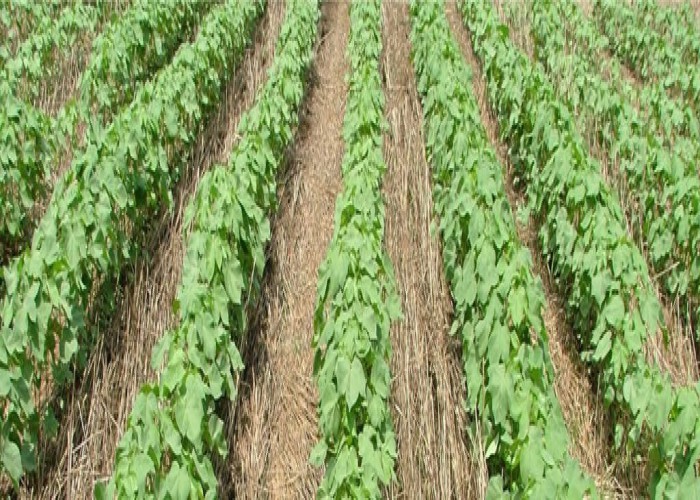
covering bare soil. Conservation tillage and planting cover crops are two
practices that help growers address these principles, creating benefits both
for their operations and the environment.
Historically, tillage has
been used to level the soil, incorporate fertilizer and suppress weeds.
However, new research suggests that
tillage can be detrimental to soil health by disrupting its structure, leading
to increased surface water runoff and soil erosion. Alternative approaches are
becoming more widely adopted. With “conservation” tillage or “no-till”
practices, growers plow only when absolutely necessary. These practices can
prevent soil erosion and reduce soil aeration; they also support the
accumulation of beneficial organic matter, which can increase soil aggregation,
water-holding capacity, nutrient cycling, and biological activity.
Additionally, this organic matter captures CO2 from the environment and stores
it in the ground, ultimately reducing the climate impacts of cotton production.
Cover crops support the use of
no-till and other conservation tillage practices by protecting and improving
soil health when the cash crop is not growing. In most growing regions, the
cotton plant takes six months or less to mature. In conventional production
systems, this leaves the soil in cotton fields bare for a significant part of
the year. Planting winter cover crops such as wheat, rye, and clover ensures
that the soil is covered and has living roots throughout the year. This helps
to increase soil structure and organic matter, reduce erosion, and enhance soil
microbial activity. Cover crops also improve land productivity as well as water
quality and use efficiency.
While these practices are
not new, they are increasingly being recognized as a strategic pairing to
improve productivity, sustainability, and profitability. R.N. Hopper, a
third-generation cotton farmer from Texas, has seen the benefits. “We grow
cotton, corn, and wheat and have utilized no-till production practices since
2006,” said Hopper during a 2021 panel discussion on soil health. “We rotate
[crops] to bring a lot of diversity in our systems, and we utilize cover crops.
For us, conservation has been its own reward, and it’s led to reduced input
costs and higher yields. It’s allowed us to continually do more with less.”
Maximizing
Diversity with Emphasis on Crops, Soil Microbes, & Pollinators
A diverse mix of
rotational crops also supports soil health and a healthier overall cropping
system. Planting only one type of crop can exhaust soil resources, requiring
additional inputs such as fertilizers to maintain plant productivity.
Introducing a greater diversity of rotational crops reduces stress on the
system and can increase nutrient and water use efficiency. By bringing a
variety of root types and residue to the soil, it can help beneficial microbial
systems thrive as well. Plant diversity also offers a natural way to control
weeds and pests, including pathogenic microorganisms.
Cover crops are one form of
plant diversity, and Nathan Reed, a third-generation
cotton grower, cites their benefits for his operation in weed management and
water use efficiency. “The cereal rye that we grow actually has an allelopathic
effect on weeds, so it produces a toxin—it makes its own herbicide,
essentially,” said Reed. “Between the shade on the ground and the root
structure of the cover crop, our water irrigation efficiency is dramatically
increased, and we’re using a lot less water.”
U.S. cotton growers are
also introducing plant diversity to support mutually beneficial conservation efforts, such
as improving pollinator and bobwhite quail habitats. The northern bobwhite
quail population has fallen 85% in North America since 1966, mostly due to
habitat degradation. Growers like Nick McMichen, a fifth-generation cotton
farmer in Georgia, have partnered with Quail
Forever and Cotton Incorporated to plant quail and pollinator
habitats as field borders on acres identified as unproductive. This saves the
cost of labor and other resources to maintain those acres while creating
benefits for soil health, neighboring crops, and the farm’s overall balance
sheet.
“They’re not big acres,
but it’s a win-win for everybody when we do that,” McMichen said. “The
environment, the farm, the farmer…everybody wins.”
Cotton’s
Sustainable Future
Regenerative agricultural
practices—including those highlighted here and others—help growers improve
productivity while making progress against vital environmental goals. At scale,
these improvements can make a global impact, not just maintaining where we are
today, but improving the health of our planet. Cotton’s sustainable future can
be part of the solution, and the U.S. cotton industry will continue to advocate
for continuous improvements at the farm, in manufacturing and with the
consumer.

The property, complete with 30-seat screening from room, a 100-seat amphitheater and a swimming pond with sandy shower…
The property, complete with 30-seat screening from room, a 100-seat amphitheater and a swimming pond with sandy shower…

The property, complete with 30-seat screening from room, a 100-seat amphitheater and a swimming pond with sandy shower…
The property, complete with 30-seat screening from room, a 100-seat amphitheater and a swimming pond with sandy shower…
The property, complete with 30-seat screening from room, a 100-seat amphitheater and a swimming pond with sandy shower…

We’ve invested every aspect of how we serve our users over the past Pellentesque rutrum ante in nulla suscipit, vel posuere leo tristique.
We’ve invested every aspect of how we serve our users over the past Pellentesque rutrum ante in nulla suscipit, vel posuere leo tristique.
We’ve invested every aspect of how we serve our users over the past Pellentesque rutrum ante in nulla suscipit, vel posuere leo tristique.
We’ve invested every aspect of how we serve our users over the past Pellentesque rutrum ante in nulla suscipit, vel posuere leo tristique.


We hate spam as much as you do
March 26, 2020
March 26, 2020
March 26, 2020
© Copyright 2020, All Rights Reserved


