


13
Islamabad
Severity: Warning
Message: Invalid argument supplied for foreach()
Filename: controllers/Main.php
Line Number: 51
Backtrace:
File: /home/textilet/public_html/application/controllers/Main.php
Line: 51
Function: _error_handler
File: /home/textilet/public_html/index.php
Line: 315
Function: require_once
Severity: Notice
Message: Trying to access array offset on value of type bool
Filename: controllers/Main.php
Line Number: 52
Backtrace:
File: /home/textilet/public_html/application/controllers/Main.php
Line: 52
Function: _error_handler
File: /home/textilet/public_html/index.php
Line: 315
Function: require_once


On January 13, the U.S. Customs and Border Protection issued a Withhold Release Order against cotton products and tomato products produced in China’s Xinjiang Uyghur Autonomous Region. This ban extends from Xinjiang Production and Construction Corps (XPCC) to Xinjiang Uyghur Autonomous Region, and the ban also applies to products processed or manufactured in third countries, CBP officials told a news briefing.
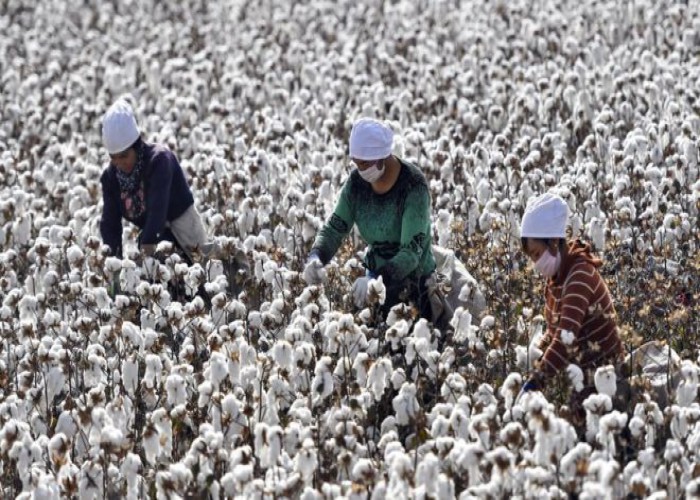
The timeline of CBP’s
ban on Xinjiang cotton and the scope is showed below:
|
Sep 8, 2020 |
Cotton and ginned cotton |
Xinjiang Junggar Cotton and Linen Co., Ltd. |
|
Nov 30, 2020 |
Cotton and cotton products |
Xinjiang Production and Construction
Corporation (XPCC) and its subordinate and affiliated entities |
|
Jan 13, 2021 |
Cotton products and tomato products |
Xinjiang Uyghur Autonomous Region (XUAR) |
The extension of the ban cools down the market sentiment somewhat as cotton
prices have been rising pushed by downstream demand and the market expects a
competition between cotton crops and food crops on planting areas worldwide. We
consider that the Chinese cotton prices may have reached the periodical high
before the Chinese New Year holiday.
The major driving force for the higher ZCE cotton futures from Dec is the
improved demand from downstream markets. This part of demand not only includes
the better demand from Europe and the U.S., but also includes the replenishment
from domestic downstream fabric mills and cotton yarn traders for the period
after the Spring Festival holiday. Cotton yarn inventory is low, and the
improved cotton yarn demand continues to push up cotton prices, and most
ginning factories in Xinjiang sell out the cotton inventory. Before Jan 14, the
cotton yarn demand has not cooled down obviously. ZCE cotton futures market
slumps on Jan 11-12 affected by higher U. S. treasury yields, lower commodity
prices and severe pandemic situation in China, but the futures rebound quickly
with the strong support of cotton yarn market and the expectation on the
competition between cotton crops and food. On Jan 13, USDA’s Jan supply and
demand report forecasts lower U.S. cotton production and global ending stocks,
which drives the market up. But the ban announced on Jan 14 (Chinese time) may
make the driving force change in short term.
Downstream fabric mills and cotton yarn traders mainly replenish feedstock on
expectation of coming buoyant season after the Spring Festival holiday, and
some expect demand recovery in Europe and U.S. after the deployment of vaccine,
but the latest ban of CBP may slow down the replenishment tempo and may impact
the recovery of export demand somewhat after the holiday. Currently, mills have
good orders, but grey fabric demand is far less than cotton yarn, and fabric
mills in some regions plan to have holiday in advance. So with the impact of
the ban, cotton yarn demand may weaken, and ZCE major cotton contract, May
contract, may be hard to hit 15,500yuan/mt or even 15,300yuan/mt before the
Spring Festival holiday. Though cotton yarn prices may not decline immediately
due to its low cotton yarn inventory, feedstock inventory in fabric mills and
spinning mills has been relatively high, and the weakness in demand before the
holiday may be seen.
The bans announced by the CBP show the determination of U.S. to put pressure on
China, and the ban on Xinjiang cotton may be hard to solve in short term. As
the scope of the ban expands, downstream companies will also increase their
risk aversion. Under the circumstance that the U.S. does not loosen the
Xinjiang cotton ban, there are only two ways to rely on the market to solve the
problem: 1. Export companies use imported cotton and imported yarn, the rising
cost is borne by U.S. companies; 2. U.S. companies refuse to bear the rising
cost, and export companies turn to compete in the domestic market or other
export markets under the pressure of cost. Regardless of the solution path, in
the short term, the impact of the expansion of Xinjiang's cotton ban on
domestic cotton cannot be ignored.
The market after the Spring Festival holiday shall keep an eye on the buoyant season.
If the demand cannot reach the anticipation, the cotton yarn that is
replenished may be sold at discounted level, but the cotton prices will be
affected by the planting expectation during planting period.


The property, complete with 30-seat screening from room, a 100-seat amphitheater and a swimming pond with sandy shower…
The property, complete with 30-seat screening from room, a 100-seat amphitheater and a swimming pond with sandy shower…

The property, complete with 30-seat screening from room, a 100-seat amphitheater and a swimming pond with sandy shower…
The property, complete with 30-seat screening from room, a 100-seat amphitheater and a swimming pond with sandy shower…
The property, complete with 30-seat screening from room, a 100-seat amphitheater and a swimming pond with sandy shower…

We’ve invested every aspect of how we serve our users over the past Pellentesque rutrum ante in nulla suscipit, vel posuere leo tristique.
We’ve invested every aspect of how we serve our users over the past Pellentesque rutrum ante in nulla suscipit, vel posuere leo tristique.
We’ve invested every aspect of how we serve our users over the past Pellentesque rutrum ante in nulla suscipit, vel posuere leo tristique.
We’ve invested every aspect of how we serve our users over the past Pellentesque rutrum ante in nulla suscipit, vel posuere leo tristique.


We hate spam as much as you do
March 26, 2020
March 26, 2020
March 26, 2020
© Copyright 2020, All Rights Reserved


